I remember it was around September 2009. I was thirty.
I had finally joined the news organization I had dreamed of working for and taken my first step into the world as a reporter. Back then, simply being able to call myself a journalist made me feel as though I had everything.
I did not own a car, so my parents bought one for me on an installment plan.
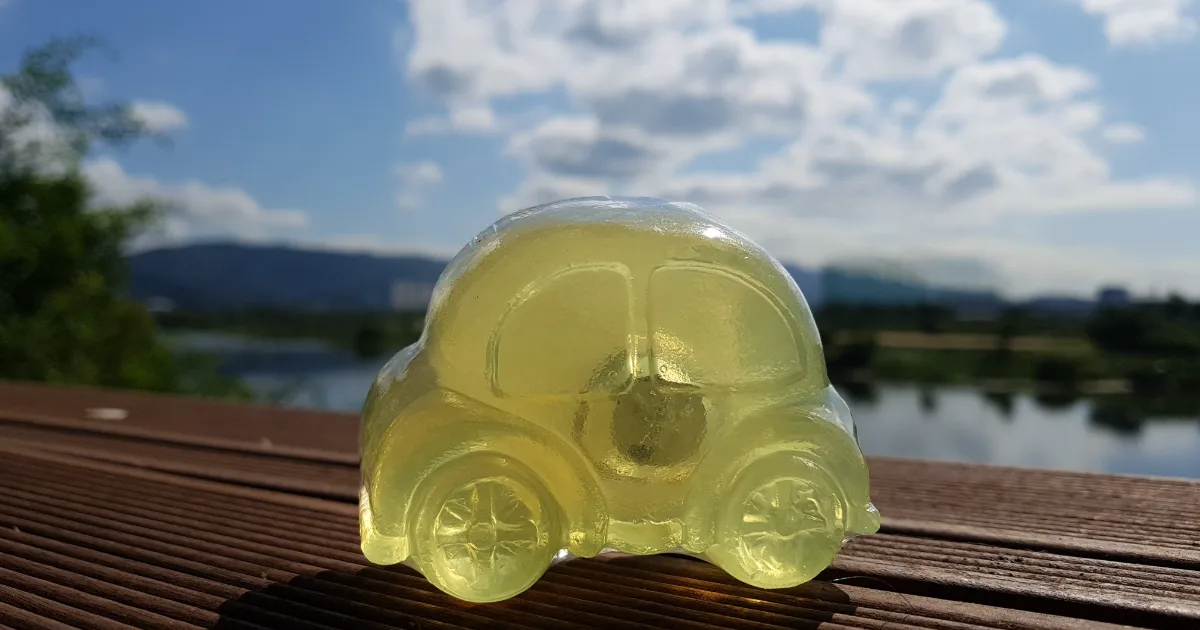
A Renault Samsung SM3 CE.
It was the first car of my life.
CE stood for Classic Edition. At the time, Renault Samsung was preparing to launch the second-generation New SM3, and the existing first-generation model was being sold at a relatively affordable price.
To put it nicely, it was a special promotion.
To put it more plainly, it was closer to clearing out inventory ahead of a model change.
Thanks to that, I was able to buy a compact sedan for a little over ten million won.
For a thirty-year-old reporter who had only just begun his career, it was a very good car.
I loved that car.
Perhaps because it was my first.
I washed it on weekends, and whenever I parked, I would get out and back in several times, worried that I might leave even the slightest scratch somewhere.
And I did one slightly unusual thing.
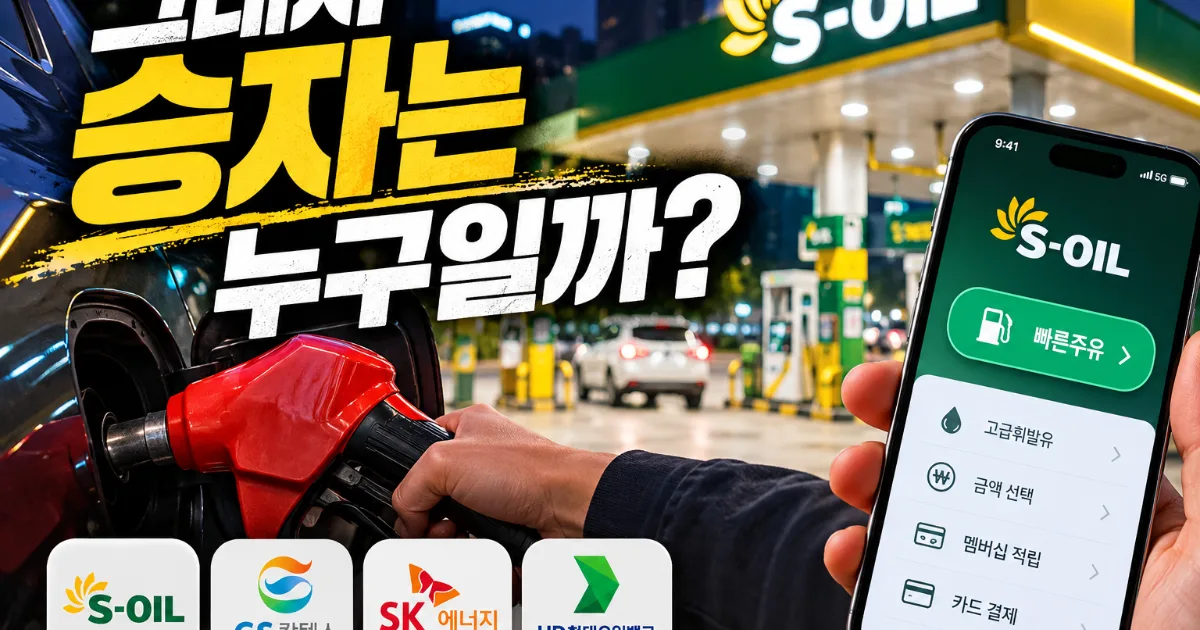
I filled it with premium gasoline.
Looking back, it is almost funny.
I was putting fuel that cost more than 2,000 won per liter into a compact sedan worth just over ten million won.
There happened to be a gas station near my home that sold premium gasoline, and without much thought, I would reach for the red pump handle.
Of course, I mostly used the car for commuting, so I did not drive enough for the fuel cost to become much of a burden.
But there was probably another reason that mattered even more.
I wanted to take good care of what I had and keep it for as long as possible.
It was the first car my parents had bought for me.
That made me care about it even more.
Looking back, that was how my habit of using premium gasoline began.
Time passed.
I left journalism, spent some time unemployed, and eventually joined the company where I work today.
In hindsight, I think I resigned somewhat recklessly, much like Mr. Kim in the Korean drama The Story of Manager Kim, Who Owns a Home in Seoul and Works for a Major Corporation.
What made me think I was so special?
Why did I assume the world would naturally need someone like me?
Only after letting go of the title “journalist” did I realize how much of my identity had depended on it.
I felt lost.
Frustrated.
More than anything, I felt sorry for myself.
I had believed I would do well, but things did not unfold the way I had expected.
I had thought I could go anywhere, yet once I actually had to find somewhere to go, it turned out not to be easy at all.
Through that period, I slowly came to understand something.
Having experience does not mean the world is waiting for you.
And believing highly in your own value is entirely different from someone else deciding that they need you.
Only after stumbling around for a while did I become a little more mature and begin my current working life.
Meanwhile, my son was growing up too.
One day, my wife and I were talking when the idea came up that perhaps it was time to get a slightly larger car.
The car was no longer just something I used to commute alone.
The three of us were beginning to spend more and more time traveling together.
If my first car had been for the young man just beginning his career, my second car now had to be for my family.
That was how I chose a Toyota Camry.
The model I bought was the 7.5-generation Camry XLE.
At the time, I compared it with the Hyundai Grandeur, Kia K7, and the newly launched Genesis G70.
I liked the Grandeur.
But once I moved up to a higher trim and added options, the price quickly climbed into the forty-million-won range.
The K7, at least to my eyes back then, felt a little too light in its design.
I had high expectations for the G70.
The interior materials were good, and the design was impressive.
But once I actually sat inside, the cabin did not quite feel like the family car I had imagined.
With options added, the price was not exactly modest either.
In the end, I chose the Camry.
When I considered price, space, durability, and maintenance costs, it seemed like the most rational choice.
As usual, I spent an enormous amount of time searching online before buying it.
On automotive forums, the Camry was often compared with the Hyundai Sonata.
But after owning one for years, my impression was a little different.
At least the Camry I drove felt closer to the Grandeur than the Sonata.
There was a sense of spaciousness in the body.
The ride quality felt that way.
So did the stability I experienced on long drives.
Because of its price, the Camry was mostly compared with midsize sedans in Korea.
But from an owner’s perspective, it felt to me less like an “affordable midsize sedan” and more like a very good-value near-luxury sedan.
And yes, I eventually began putting premium gasoline in the Camry as well.
I had not done so from the beginning.
One day, after driving for a while on regular gasoline, the engine seemed rougher and noisier than usual, so I went to a service center.
During the inspection, someone suggested that I try premium gasoline.
So I did.
Surprisingly, at least to my ears, the engine sounded somewhat smoother.
I have no idea how significant the difference really was scientifically.
It may simply have been a placebo effect.
But what mattered was what happened afterward.
I started using premium gasoline again.
With my first car, it had been about taking good care of something my parents had bought me.
With the Camry, it became about keeping the car in the best condition I could.
Premium gasoline gradually became part of my life as a driver.
And then I turned forty.
I gave myself a car.
A Mercedes-Benz E250.
To be precise, I did not buy it simply to celebrate the number forty.
It was closer to the first genuinely significant gift I had allowed myself after navigating several difficult chapters of my life.
I had begun my career as a reporter.
Later, I left that identity behind and moved into the corporate world.
The transition was not always smooth.
There were many good moments, but there were also times when life felt almost suffocatingly difficult.
At one point, like Manager Kim in the drama, I went through a period difficult enough to experience panic disorder.
I kept surviving one frantic day after another, and before I knew it, I was standing in front of the number forty.
Then one day I thought:
Maybe I’m allowed to drive a car I truly like at least once in my life.
It was not about showing off to anyone.
Nor was it about proving that I had succeeded.
I simply wanted to say something to the person I had become.
“You made it this far. You held on.”
That was how the Mercedes-Benz E250 came into my life.
A Mercedes-Benz E250 Exclusive.
Including taxes and registration fees, it was by no means an inexpensive purchase for me.
That was why I thought about it for so long.
And on the day I took delivery, I stood in the parking lot for quite a while just looking at it.
I never thought of the car as a symbol of success.
To me, it meant something closer to this:
“You’ve made it this far.
You’ve survived more than you realize.”
Perhaps the E250 Exclusive was a slightly belated gift from the forty-year-old me to the thirty-year-old me.
And once I began driving the Mercedes, premium gasoline was no longer simply a matter of personal preference.
The owner’s manual recommended fuel with an octane rating of RON 95 or higher.
If I had chosen this car, I wanted to give it the fuel it was designed to use.
Looking back, it is rather amusing.
From my first SM3 to the Camry and then to the Mercedes-Benz E250, the cars changed three times.
Yet I kept using premium gasoline.
At first, I simply wanted to take good care of the first car my parents had given me.
With the Camry, I wanted to maintain the engine in the best condition possible.
And with the Mercedes, I came to believe that if I wanted the car to perform the way it was meant to, I should give it the fuel designed for it.
That small stubbornness gradually became part of my life with cars.
Of course, in a country that produces virtually no oil of its own, deliberately paying extra for premium gasoline may sound a little strange.
Especially now, when fuel prices are high.
Some people ask why anyone would willingly pay more.
It is a fair question.
From a purely economic point of view, premium gasoline is not always the rational choice.
Not every car requires it.
Even so, whenever possible, I try to use the fuel that best matches the car I chose.
There is something I have believed for a long time.
Prices usually exist for a reason.
That does not mean everything expensive is good, nor that everything inexpensive is inferior.
But I am skeptical of claims that something can be simultaneously dirt-cheap, top-of-the-line, and excellent in every possible way.
If the price is low, there is usually a reason.
And if the price is high, there is usually a reason for that too.
So rather than looking only at the price tag, I try to understand what lies behind it and why that particular price exists.
Cars are like that.
Fuel is like that.
And perhaps people are too.
The number printed on the outside matters less than what has accumulated beneath the surface.
After years of filling the Mercedes with premium gasoline, another question eventually occurred to me.
“If I’m going to use premium fuel, how efficiently can I actually use it?”
From that point on, I started competing with my former self every time I drove.
Not in speed.
In fuel economy.
That is why long-distance drives make me a little excited.
On a long stretch of highway, I turn on the semi-autonomous driving system and begin wondering how I might finish the trip with slightly better mileage than last time.
In everyday driving, I rarely fill the fuel tank completely.
I usually keep it at around sixty percent.
I have always assumed that carrying less weight might help fuel efficiency, even if only slightly.
But things are different when my family and I are leaving Seoul for a long trip.
Before heading out of the city, I always stop at my regular gas station, the S-OIL Taereung Solbat station.
There, I fill the tank with premium gasoline.
I check the mileage.
I look at the instrument cluster.
And then I start the engine again.
That is when my own little game begins.
Almost as if I have logged into one.
Driving stops feeling like merely traveling from one place to another.
It becomes a small strategy game.
Speed is not what I care about in this game.
Only efficiency.
The question is not how quickly I can arrive.
The question is how efficiently I can travel using the same amount of fuel.
The moment I set off, I give myself a small mission.
“How far can I go this time?”
“Can I drive a little better than I did last time?”
In June 2024, my son and I took a three-day, two-night trip to South Gyeongsang Province.
The original purpose of the trip was to give him a firsthand experience of modern Korean history.
We planned to visit Tongdosa Temple in Yangsan, stop by Pyeongsan Bookstore, and then travel to Bongha Village in Gimhae.
I wanted us to see the people and places of history with our own eyes and talk about them together.
But for me, there was another concept that made the journey even more interesting.
It was also a “fuel economy trip.”
As always, I pulled up to the premium gasoline pump at the S-OIL Taereung Solbat station and filled the tank.
60.27 liters.
The total came to 114,325 won.
At the time, S-OIL premium gasoline cost 1,897 won per liter.
The entire trip—from Seoul down through South Gyeongsang Province and back home again—would be roughly 1,000 kilometers.
I found myself wondering whether I could complete the entire round trip on a single tank.
Naturally, ambition crept in.
I wanted to return home without stopping to refuel even once.
I had always enjoyed watching the fuel-efficiency numbers on the dashboard, so I developed an entirely unjustified confidence that a long-distance trip might be the perfect opportunity to try something ambitious.
I set one more goal.
I wanted to break my personal fuel-efficiency record.
Up to that point, the best mileage I had recorded in the E250 was 16.1 kilometers per liter.
The first leg of the trip was approximately 156 kilometers from Seoul to Sejong.
I obeyed the speed limit and tried to move naturally with the flow of traffic.
On a two-lane road, I stayed in the second lane.
On a three-lane road, I stayed in the third.
I did not want to block traffic behind me simply for the sake of improving my fuel economy.
But I did not drive excessively slowly either.
I found that repeatedly slowing down and speeding up behind an unusually slow vehicle was often less efficient than passing smoothly when appropriate and maintaining a steady speed.
After driving 156 kilometers, I checked the display.
17.9 km/L.
My previous best of 16.1 had been broken.
At one point on the highway, the number even rose to 18.2 km/L.
It was nothing more than a number, yet somehow it made me happy.
It felt like beating my previous high score in a game.
The next day, while driving 263 kilometers from Sejong to Yangsan, I broke the record again.
The average fuel economy was 18.2 km/L.
On the highway, it briefly reached 18.5.
Another personal best.
ⓒ Gwanghwamun Deok
From that point on, the trip gained another layer of enjoyment.
There was the pleasure of visiting places with my son, and alongside it, the pleasure of watching the number on the dashboard continue to rise.
One thing in particular fascinated me during that journey.
The semi-autonomous driving system.
On the highway, the system measures the distance from the car ahead and adjusts the speed automatically.
As I continued watching it, I noticed something interesting.
Fuel economy was better when I did not interfere.
When I let the car drive smoothly on its own, the efficiency number gradually rose.
Whenever I became impatient, pressed the accelerator unnecessarily, or increased the speed without reason, the number quickly fell.
Watching this, I laughed to myself.
“You’re a better driver than I am.”
Perhaps because I have studied AI and mobility, I could not see it purely as an automotive feature.
If a car can maintain a steadier speed than a human and reduce unnecessary acceleration and braking, then at least from the perspective of efficiency, perhaps allowing the machine to handle more of the driving can sometimes be better than constant human intervention.
Of course, my role remained clear.
I had to keep my hands on the wheel and pay attention to my surroundings.
If a faster vehicle approached from behind, I needed to move over.
If an excessively slow vehicle disrupted the traffic flow ahead, I needed to change lanes safely.
My job was to create the conditions in which the car could operate as efficiently as possible.
That was my role in this game.
Sometimes, rather than feeling that I am “driving” the car, I feel as though I am managing it.
I am not directly controlling every movement.
Instead, I am creating an environment in which the available resources can be used as efficiently as possible.
Much like a good leader does not personally perform every task.
ⓒ Gwanghwamun Deok
Of course, safety always matters more than numbers.
On the last day of the trip, heavy rain fell as we drove toward Bongha Village.
It was my first time on those roads, and I was unfamiliar with the area.
At that point, I let go of my desire to chase fuel-efficiency records.
Whether the car achieved 18 km/L or 16 km/L no longer mattered.
What mattered was reaching our destination safely with my son.
As a result, on the section from Bongha Village back toward Sejong, the average dropped to 16.1 km/L.
I was not disappointed at all.
Raising the number might have been the goal of the game, but there was a rule more important than the game itself.
The game can only continue if you are safe.
It sounds obvious.
Yet strangely, becoming obsessed with fuel economy made that truth even clearer.
Pursuing efficiency and pursuing nothing but efficiency are entirely different things.
Eventually, the trip ended and we arrived home.
Total distance traveled: 1,018 kilometers.
Average fuel economy for the entire trip: 17.1 km/L.
Best highway fuel economy: 18.5 km/L.
But what surprised me most was the fuel gauge.
Even after traveling more than 1,000 kilometers, nine percent of the fuel remained.
The dashboard estimated that I could still drive another 118 kilometers.
ⓒ Gwanghwamun Deok
Since I had filled the car with 60.27 liters before leaving, I had effectively traveled from Seoul to South Gyeongsang Province and all the way back home on a single tank.
Seeing that number made me unexpectedly proud.
To someone else, 17.1 km/L may mean absolutely nothing.
To me, it was something like a report card showing how I had driven for those three days.
I had not rushed.
Whenever possible, I had tried to anticipate the flow ahead.
I had left things to the car when the car could handle them.
I had intervened only when necessary.
When rain came, I abandoned my desire for a better record and chose safety instead.
All of those decisions were ultimately distilled into a single number on the dashboard.
After that trip, I became even more fascinated by fuel-efficient driving.
Perhaps it had originally begun as nothing more than an attempt to save a little money on fuel.
But somewhere along the way, it became something more than thrift.
It became a small game against myself.
Drive a little better than yesterday.
Travel a little more efficiently than on the previous trip.
Instead of forcing every last bit of performance out of the car, try not to waste the fuel already available.
And somewhere in that process, I learned something unexpected.
You do not always have to travel fast in order to travel far.
Sometimes, the less desperate you are to go fast, the farther you can actually go.
When I first began writing this essay, I thought I was simply going to write about my long-standing habit of using premium gasoline.
But as I wrote about fuel economy, the numbers gradually stopped feeling like a story about cars.
They began to feel like a story about my life.
Perhaps that is because the past month I spent working as a proposal project manager had been so demanding, relentless, and lonely.
Unexpected problems arose several times a day.
The boundary between what I needed to solve myself and what I needed to delegate to others kept disappearing.
Because I desperately wanted everything to go well, I kept gripping the steering wheel myself, alternating between accelerator and brake.
At some point, I realized I had been driving without even knowing how much energy I had left.
Then a thought occurred to me.
“What if life has fuel economy too?”
At thirty, I believed living well meant moving fast.
I wanted to write better stories before anyone else.
I wanted more recognition.
I wanted to stay even one step ahead of everyone around me.
Slow people frustrated me.
Whenever I saw an opportunity, I felt I had to seize it before somebody else did.
I lived as though my foot were permanently pressing the accelerator.
What I did not understand then was that continuous acceleration does not necessarily take you farther.
Now, well into my forties, I think differently.
Sometimes you need to take your foot off the accelerator.
Sometimes you need to look at the flow ahead and slow down before you are forced to.
And sometimes, no matter how badly you want to go faster, you simply have to wait.
Most importantly, I now understand that my energy is not infinite.
Work is like that.
Relationships are like that.
The human heart is like that.
No one can sprint at full speed forever.
At thirty, I wondered how fast I could go.
Now I find myself wondering how far I can go with the energy I have left.
Looking back, my life has contained plenty of sudden acceleration and hard braking.
I wanted to become a journalist, so I raced forward without looking anywhere else.
Then, at one point, I quit my job rather recklessly.
When I entered a new company, I pressed the accelerator again with all my strength because I wanted to prove myself all over again.
Eventually, my body and mind turned on their warning lights before I did.
Only then did I understand.
A car eventually breaks down if you push it too hard.
People are no different.
If you want to travel far, resting well matters just as much as driving well.
And knowing when to slow down matters just as much as knowing how to move quickly.
Fuel-efficient driving taught me something else too.
If you want to use the brakes less, you need to look farther ahead.
If you stare only at the car immediately in front of you, you keep accelerating and braking over and over again.
But if you look two or three cars ahead, things change.
The moment you see brake lights in the distance, you can take your foot off the accelerator before you ever need to brake.
Unnecessary acceleration disappears.
So does sudden braking.
Perhaps life works the same way.
If you live focused only on the problem directly in front of you, every moment feels urgent.
When someone seems to be moving ahead of you, impatience sets in.
When something unexpected happens, you turn the wheel abruptly.
But when you look farther down the road, falling one or two steps behind does not seem like such a terrible thing.
The important thing is not being the first to arrive.
It is reaching the place you actually want to go.
Safely.
These days, I am learning one more thing.
I do not have to be the one driving every moment.
Just as the car sometimes achieved better fuel economy when I let the semi-autonomous system do its job, not everything turns out better simply because I personally take control of it.
I have thought about this a great deal lately while working as a proposal project manager.
A leader’s job is not to press both the accelerator and the brake personally and drag everyone forward.
It is to trust the people working alongside you.
To delegate.
To set the direction.
To create an environment in which everyone can move properly.
Perhaps that is the kind of leadership I am only now beginning to learn.
I am still not very good at it.
Sometimes, because I want to help, I end up doing someone else’s work for them.
And when things do not unfold the way I hoped, I grip the steering wheel again and want to control everything myself.
Before long, my energy is completely drained, and I have nothing left for the work that only I can do.
In fuel-economy terms, it is terrible driving.
So these days, I am practicing.
Not accelerating when acceleration is unnecessary.
Letting go of work I do not need to do.
Leaving other people’s work to them.
Looking beyond the problem directly in front of me and seeing the larger flow.
And above all, making sure everyone reaches the destination safely.
The more I think about it, the more life after forty seems less like a race for maximum speed and more like a journey in which fuel economy matters.
It becomes less about who arrives first and more about how wisely you use the time, strength, and emotional energy you have been given.
You may no longer be able to press the accelerator recklessly the way you did when you were young.
But perhaps you begin to understand where to use your strength and where to ease off.
Maybe that is the way of driving through life that we only begin to learn after forty.
During the past month, when I practically lived in the proposal room, my E250—my “E-clie,” as I affectionately call it—sat almost abandoned in the parking lot.
I feel strangely sorry for it.
I would arrive at work and disappear into the proposal room.
By the time I left, the entire day was already gone.
Weekends were not much different.
And so the summer of 2026 passed by inside that room before I ever had the chance to feel it properly.
Only now have I finally stepped out.
When I opened the door and walked outside, the air had already changed.
I thought it was still summer, yet a breeze that felt almost like autumn slipped through my sleeves.
For a moment, I felt strangely empty.
And I found myself asking:
“Where did my summer of 2026 go?”
Of course, I know the answer.
My summer was inside that proposal room beneath the LED lights.
It disappeared into endlessly revised presentation slides, meetings, phone calls, and the emotions exchanged between people.
An entire season passed that way.
Perhaps that is why, today of all days, I want to take my E250 out for a drive.
I feel like starting the engine of the car that has spent so long sitting in the parking lot and simply driving somewhere without choosing a destination.
I want to lower the window slightly and feel the wind.
Not rush.
Not try to arrive before anyone else.
Just drive as far as I feel like driving.
If I went for that drive today, I think the fuel-economy number on the dashboard would look a little different to me.
Not because I would want to make the number even higher.
Simply watching how far I could travel with the fuel I already have would somehow make me feel at ease.
I do not have to go fast.
I do not have to arrive before everyone else.
I just have to avoid wasting the fuel I have and make it safely to wherever I truly want to go.
I’ve been pressing the accelerator for far too long in that proposal room over the past month.
Maybe it’s okay to slow down for a while.
Because the people who travel farthest are not always the ones who travel fastest.