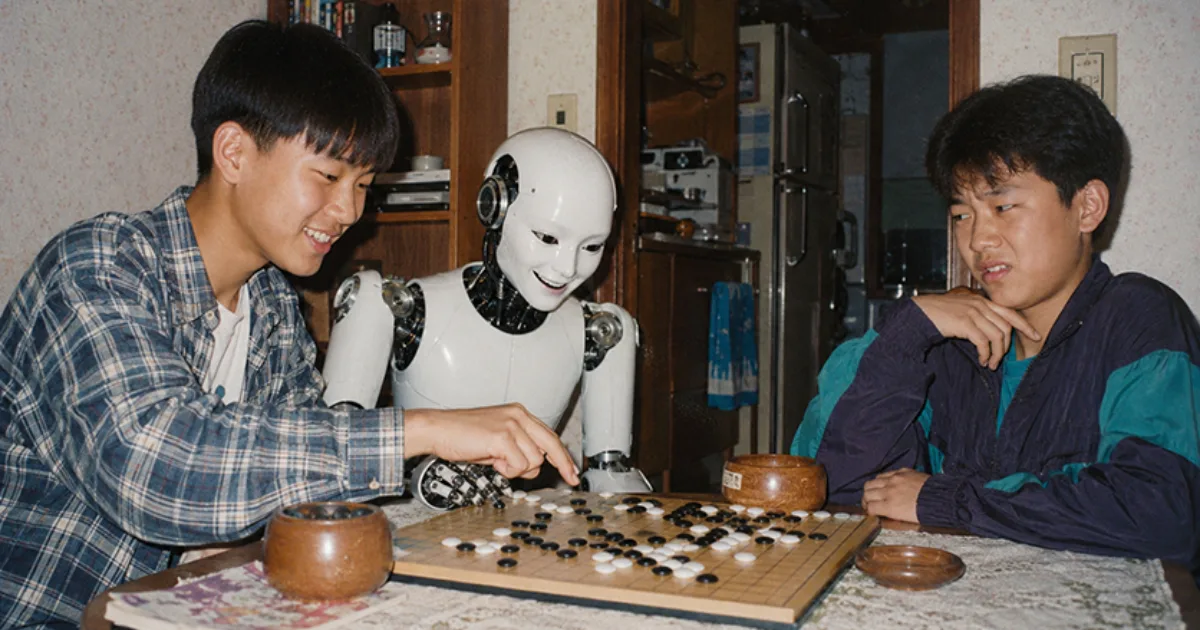
In games, artificial intelligence does not appear as a single feature. NPCs that generate dialogue, systems that adjust difficulty to individual players, functions that recommend items and content, generative AI that produces narratives and images, and automated tools that manage communities are all grouped under the label of “game AI.” Yet players do not evaluate these functions by the same standards. They may welcome AI that makes NPCs feel more lifelike while rejecting its use in generating a game’s artwork. They may be curious about creating new forms of play with AI but feel uncomfortable with systems that analyze their behavior and adjust difficulty accordingly.
Ting-Chen Hsu and colleagues focus precisely on these differences in their paper, “Who Embraces AI in Play?” The question posed by the researchers is not simply whether players like AI in games. Instead, they relocate the question: when one person evaluates several kinds of game AI, what structure do their preferences and objections form? The researchers surveyed 771 digital game players in China and modeled their attitudes toward game AI into seven preference profiles.
Seven Player Types Between Acceptance and Rejection
Research on AI acceptance often measures the degree of support or opposition. It distinguishes people who are broadly positive about AI from those who are broadly negative, then examines how factors such as age, technological experience, and education affect those attitudes. In games, however, the authority delegated by the player varies according to where and how AI operates.
Intelligent NPCs alter characters’ dialogue and behavior. Dynamic difficulty adjustment changes the rules and intensity of challenge. Generative AI enters domains traditionally occupied by writers and artists. AI-based community moderation can delete speech or sanction users. All of these are forms of AI, but what players question is often not the technology itself so much as the role it occupies.
The paper’s important shift lies in moving beyond separate scores for individual AI functions and examining how multiple judgments are combined within a single player. The researchers presented eight contexts: intelligent NPCs, emergent narratives, dynamic difficulty adjustment, personalized recommendations, community moderation, art asset generation, AI-collaborative play, and self-evolving gameplay.
The results showed that players could not be divided simply into consistent technological optimists and pessimists. Some users accepted AI operating the game but rejected AI creating content. Others welcomed creative experimentation while resisting recommendations and difficulty adjustment. Acceptance of game AI was less like a high or low score on a single line than an arrangement of preferences branching in several directions.
Comprehensive Support and Comprehensive Rejection
The first group consists of “AI Skeptics.” They showed negative attitudes toward nearly all the game AI functions included in the survey. Around 11 percent of respondents most strongly displayed this profile.
The second group, “Broad AI Supporters,” was the largest, accounting for approximately 43 percent of respondents. They evaluated most functions relatively positively, from intelligent NPCs and recommendations to difficulty adjustment and content generation. Older participants, those who felt knowledgeable and capable in using AI, and those with high levels of general AI acceptance were more likely to belong to this group.
A particularly interesting finding concerns the AI Skeptics. They tended to rate their own AI competence as low, yet they were also more likely to report using AI for programming or work-related purposes. This does not fit the common assumption that practical use of AI naturally produces a more positive attitude toward it.
AI as Creator and AI as a Tool for Play
“Creative Play Explorers” formed a small group of approximately 4.5 percent, but they reveal an important distinction in debates about game AI. They responded positively to functions that allowed them to create forms of play with AI or enabled the game system to change by itself. At the same time, they reacted negatively to AI-generated art assets and to systems that analyzed players in order to recommend content or adjust difficulty.
This profile shows that acceptance of generative AI is not determined by a single criterion called “creativity.” There is a difference between AI producing a finished result on the player’s behalf and AI opening possibilities for the player to attempt new actions.
When AI completes images and assets, players consume an already produced result. When AI alters rules or creates new situations in response to player choices, however, the center of creation remains within the process of play. For these players, the crucial question is not whether AI itself is creative, but whose actions are responsible for changing the game.
Invisible AI Is Welcomed, but AI as Author Is Rejected
“Experience-Oriented Supporters” accounted for approximately 14 percent of respondents. They were positive toward intelligent NPCs and dynamic difficulty adjustment but negative toward AI-generated narratives and images, as well as functions that positioned AI as a collaborative creator alongside the player.
Their preferences reveal a distinction between AI operating in the foreground of a game and AI working behind the scenes. When NPC responses become more natural and combat difficulty is adjusted smoothly, players experience the effects without needing to remain constantly aware of the AI’s presence. Labels such as “AI-generated story” or “content co-created with AI,” by contrast, bring the technology to the foreground of the experience.
For this group, AI is closer to stage machinery than to an author or performer. It is accepted while it improves the experience without interrupting the flow of play, but attitudes change when it prompts players to reconsider the source of the work and the identity of its creator.
Members of this group also tended to regard disclosure of AI use as important. They wanted AI to operate unobtrusively for the sake of immersion, while still demanding that the system disclose the fact that AI was being used. This suggests a distinction between concealment and invisibility. AI does not need to draw attention to itself within the experience, but its existence should not be hidden.
Controllable Systems and Systems That Change Themselves
“System Order Advocates” accepted recommendations, community moderation, and limited forms of AI assistance, while responding negatively to dynamic difficulty adjustment and self-evolving gameplay. Players who preferred simulation games and regarded AI disclosure as important were more likely to belong to this group.
Recommendations and community moderation intervene in player behavior, but their purposes and operational boundaries can be explained relatively clearly. When a game secretly changes its difficulty or allows its rules to evolve autonomously, however, the connection between cause and effect becomes less visible. Players may struggle to determine whether failure resulted from their own lack of skill or from an adjustment made by the system.
Consistency of rules is especially fundamental to the experience of simulation games. Players observe the system, form hypotheses, and learn the relationship between their actions and the resulting outcomes. When AI continually revises the rules during this process, the activity of understanding the game world can itself become unstable.
What these players want is not necessarily an unchanging system, but one in which the scope and reasons for change can be traced. More important than AI autonomy is whether the player can maintain an intelligible causal account of the system.
Supporting AI but Distrusting AI as Judge
One of the clearest profiles is that of the “Governance Skeptics.” Accounting for approximately 18 percent of respondents, they were relatively positive toward AI-generated art assets but strongly opposed functions that used AI to manage communities and evaluate user behavior.
This group displayed relatively high levels of general AI acceptance, and people with backgrounds in the social sciences were also more likely to belong to it. Their rejection of AI governance therefore did not arise from opposition to the technology itself. Rather, they distinguished between different kinds of authority exercised by AI.
If users dislike an image or piece of content produced by AI, they can choose not to use it. The judgment of a moderation AI, however, can directly alter a user’s ability to act through measures such as deleting posts, restricting chat, or suspending accounts. The failure of generative AI may remain a problem of quality, whereas the failure of governance AI becomes a matter of procedure and rights.
Players Accept Allocations of Authority, Not AI in the Abstract
The principle running through the paper’s seven profiles is not limited to AI performance or novelty. Players evaluate what kinds of authority AI is given within the game.
When AI controls NPCs, it is granted authority over character behavior. When it adjusts difficulty, it gains the authority to change the conditions of play. When it generates assets, it determines visual outcomes. When it moderates a community, it can restrict the speech and participation of other players.
The same person may delegate one kind of authority while rejecting another. Creative Play Explorers allow AI to transform play but remain cautious about giving it the authority to produce finished creative works on their behalf. Experience-Oriented Supporters allow AI to adjust the experience but do not surrender the position of authorship. System Order Advocates permit moderation and recommendation while rejecting the opaque evolution of game rules. Governance Skeptics accept AI’s productive capabilities but refuse to recognize its authority to judge people.
Seen in this light, acceptance of game AI is closer to a judgment about the allocation of authority than to a general liking for technology. Players do not stop at asking, “Is AI useful?” They also ask, “How much should AI be allowed to decide?”, “What control do I retain over those decisions?”, and “When something goes wrong, from whom can I demand an explanation?”
There Is No AI for the Average Player
Based on the seven profiles, the researchers argue that game AI should not be offered as a single integrated package. For some players, intelligent NPCs, recommendations, and difficulty adjustment may form a compatible set of functions. For others, each constitutes a separate intervention requiring separate consent.
Game AI settings therefore need to offer more than a simple on-and-off switch. NPC dialogue, difficulty adjustment, content generation, recommendations, and community moderation should be separated, allowing players to choose the degree of intervention. Games should also indicate when AI has been used, provide procedures for contesting automated decisions, and allow cases to be transferred to human review when necessary.
The important task is not to persuade every player to accept AI. It is to reflect in design the fact that different players accept or reject AI for different reasons. Even as AI functions become more familiar, these differences are unlikely to disappear. Once the unfamiliarity of the technology diminishes, questions concerning creative agency, the visibility of rules, controllability, and the legitimacy of judgment may become even more pronounced.


