Rethinking the Artistic Value of NFTs Through Art-Historical Discourse
Before Calling NFT Art “New,” Ask What Has Already Happened Before
Debates surrounding NFT art have long oscillated between two extremes. On one side is the claim that blockchain technology has fundamentally transformed the ownership and circulation of art. On the other is the suspicion that NFTs merely repackage speculative trading and digital images as art.
Jinyoung Kim’s paper, Critical Standards of NFT Art’s Artistic Value Based on Art Historical Discourse, avoids choosing either side. Instead, it changes the question. Rather than immediately deciding whether NFT art is or is not art, the paper first asks how artistic value has historically been judged and then places NFT practices within that longer trajectory.
To do so, the author divides NFT art into three dimensions—medium, production, and reception—and proposes six critical criteria: appropriation and burning through transactions or reproduction, collaboration between art and technology, social consciousness, the deskilling strategies of conceptual art, the risks of data algorithms, and forms of self-expression and subcultural reception.
What matters here is that NFT art is not treated as a technological mutation detached from art history. Many characteristics that appear novel in NFTs—reproduction, appropriation, immateriality, collaboration with technicians, deskilling, data processing, and audience participation—have already appeared repeatedly throughout modern and contemporary art.
Blockchain changes the situation by connecting these previously separate issues directly to systems of ownership and exchange. The novelty of NFTs therefore lies less in the individual elements themselves than in the way they converge within a single technological and economic infrastructure.
When Images Can Be Copied Infinitely, Scarcity Becomes Part of the Work
The first critical criterion concerns transaction, reproduction, appropriation, and burning.
Digital images are inherently easy to reproduce. The interesting feature of NFTs is that they do not actually prevent copying. Instead, they create scarcity around a particular token within an environment where the image itself can still circulate freely.
This means that looking only at the visible image is insufficient for understanding NFT art. How many editions were issued? Can they be reproduced? Can physical and digital versions coexist? Can one version be destroyed? How is ownership transferred? Such rules of circulation become part of the work’s meaning.
The paper connects this situation to Marcel Duchamp’s Boîte-en-valise, Seth Price’s Dispersion, and Yves Klein’s experiments with immaterial art. Klein’s destruction of receipts for his Zones of Immaterial Pictorial Sensibility is particularly suggestive. After purchasing an immaterial work, a collector could participate with Klein in burning the receipt, effectively destroying the physical evidence of ownership.
NFT burning produces an intriguing historical echo of this practice. Yet the motivations may differ dramatically. In contemporary NFT markets, burning tokens can reduce the available supply and thereby increase scarcity. The same physical or symbolic action—destruction—can therefore operate according to entirely different artistic and economic logics.
Beeple’s Everydays: The First 5000 Days becomes an important counterexample. The work circulates as an NFT, digital images, and a printed book. Kim contrasts this mode of circulation with Duchamp and Klein.
Where Duchamp and Klein often sought to disrupt or critically examine the commodity status of art, Beeple aggressively inserts his images into the circuits of the market. A similar formal strategy does not necessarily produce a similar artistic meaning. What matters is not simply whether reproduction or burning occurs, but what relationship those operations establish between artwork and market.
Collaboration Between Art and Technology Produces Both New Aesthetics and New Labor Structures
The second criterion concerns collaboration between art and technology.
Here the paper places NFT and digital art within a lineage stretching back to Experiments in Art and Technology, or E.A.T., in the 1960s. Collaboration between artists and engineers did more than produce novel visual effects. It gradually expanded toward questions of social interaction, local communities, access to information, and democratic participation.
Superflex’s All Data to People and Refik Anadol’s works using environmental and community data can be understood as extensions of this trajectory.
Yet collaboration has another side.
As technical production became more specialized, art fabrication companies and large studios emerged. The artist could increasingly provide the concept while teams of designers, engineers, fabricators, programmers, and data scientists executed the work. Such systems are familiar today in the large-scale studios of artists such as Olafur Eliasson and Refik Anadol.
Technological collaboration enables artists to produce works that exceed the abilities of any single individual. At the same time, it raises questions about authorship and labor: Who is actually producing the work? Whose expertise is transformed into the artist’s symbolic and economic value?
Kim therefore argues that the technical sophistication of NFT art cannot be evaluated independently of its production structure.
At this point, the focus of criticism moves away from the image itself and toward the system behind it. What appears on screen matters, but so do the labor, technology, data, and capital that make the image possible.
Social Consciousness as a Measure of Artistic Value
From the perspective of production, the third criterion is social consciousness.
The author begins from the idea that contemporary art frequently derives part of its significance from its capacity to register and critically address social and historical conditions. This framework establishes another distinction between technically impressive or commercially successful NFT works and those that actively intervene in social issues.
Pak and Julian Assange’s Censored and Edward Snowden’s Stay Free are particularly important examples. These projects connected NFT transactions to fundraising and decentralized autonomous organizations, or DAOs.
Here blockchain infrastructure is not merely a mechanism for authenticating ownership. Fundraising, voting, and collective participation become part of the work’s political operation. A technological structure that might otherwise remain external to the visual image becomes a mechanism through which the artwork performs its social purpose.
By contrast, criticism directed toward Beeple’s Everydays and Anadol’s Unsupervised is interpreted partly through the question of whether technological spectacle is accompanied by an equally compelling social or conceptual position.
The crucial point is not simply whether an artwork promotes a morally admirable cause. The stronger question is whether its technological structure actually produces social relations or enables actions consistent with its subject matter.
Technical Awkwardness Can Be Artistic, but Awkwardness Alone Is Not Enough
The fourth criterion, deskilling, provides one of the paper’s more unusual ways of interpreting Beeple.
Modern art has repeatedly challenged the assumption that artistic value depends on technical mastery. Collage, readymades, conceptual art, and conceptual photography shifted attention away from manual virtuosity toward selection, systems, ideas, and procedures.
The paper follows Seth Price in suggesting that Beeple’s use of Cinema 4D may be understood within this historical lineage. During the early years of the Everydays project, Beeple was still learning the software while producing one image every day. His limited mastery of the tool and occasional misuse of its functions can therefore be interpreted through the concept of deskilling.
Yet the paper draws an important boundary here.
Conceptual art could abandon conventional craftsmanship because the concept was expected to carry the work. Sol LeWitt’s famous emphasis on the idea becomes relevant. The appropriate question is therefore not simply whether an artist demonstrates technical skill.
Instead, one must ask: Is the concept strong enough to justify abandoning technical refinement?
That question is particularly relevant to contemporary AI-generated art. As the technical difficulty of producing images declines, the amount of manual labor required to make an image becomes an increasingly weak measure of artistic value. The significance of the decisions, constraints, and concepts governing production becomes correspondingly more important.
Reading Algorithms as Ways of Seeing the World
The fifth criterion concerns the risks of data algorithms.
Here the paper expands NFT criticism into the territory of philosophy of technology. Drawing on Ed Finn’s idea of “algorithmic reading” and Martin Heidegger’s concept of enframing, Kim argues that data-driven art should not be evaluated merely as a new technique for creating images.
The more fundamental question is how computational systems transform the world into data.
Refik Anadol’s Unsupervised provides the central example. The work uses artificial intelligence trained on data derived from the Museum of Modern Art’s collection, creating continuously changing visualizations from an archive far too large for any individual viewer to comprehend at once.
One interpretation celebrates this as an expansion of human perception. Computational systems reveal patterns that human observers could never process manually.
The paper, however, also reverses the direction of the gaze.
Frida Kahlo, Claude Monet, Vincent van Gogh, Gustav Klimt, and numerous other artists possessed radically different histories, visual languages, and formal concerns. Within an algorithmic system, however, their works must all become comparable forms of data.
Technology allows more information to become visible, but it may also flatten difference by translating heterogeneous artworks into computationally legible components.
Criticism of AI and NFT art therefore cannot stop at the beauty of the final image.
One must ask what data entered the system, how it was categorized, what the algorithm recognizes as significant, and what becomes invisible during that transformation.
The relevant issue is less whether artists should or should not use technology than how a technology cuts, classifies, and reorganizes the world before presenting it back to us.
Blockchain itself remains ambivalent within this discussion. Following Ed Finn, the paper notes that blockchain can move financial records from centralized institutions toward transparent distributed ledgers and replace institutionally guaranteed trust with forms of collective consensus.
Yet even decentralized systems ultimately depend upon trust and good faith among participants.
This is why Hito Steyerl’s Animal Spirits occupies an interesting position in the discussion. The work mocks crypto-economics and NFT culture while refusing to eliminate entirely the political possibilities contained within decentralization.
The Audience Moves From Viewing Art to Performing Its Value
The final criterion concerns self-expression and subcultural reception.
This is perhaps the point where NFT culture most clearly departs from conventional models of art reception.
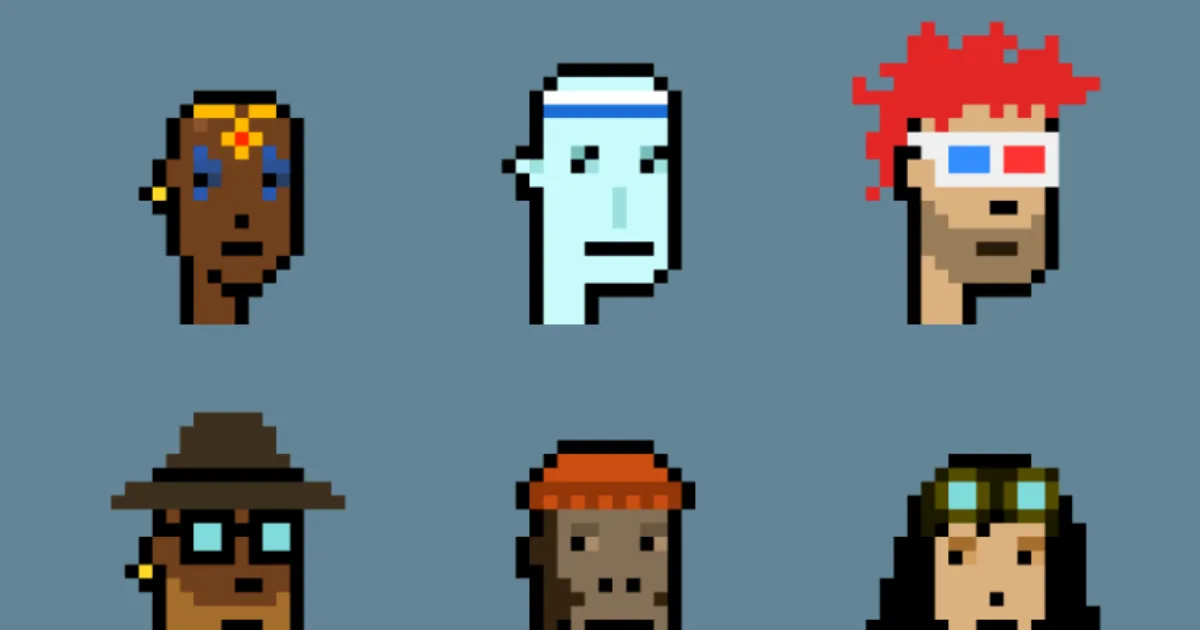
PFP collections such as CryptoPunks and Bored Ape Yacht Club are not designed merely to be looked at. Owners use them as profile pictures, participate in online communities, generate derivative memes, signal membership, and construct digital identities around ownership.
The image consequently functions both as an artwork and as a social marker.
Its value does not remain entirely inside the object. Value emerges through circulation, display, ownership, remixing, communication, and participation.
Nyan Cat provides a simple example. Users produced countless variations, transforming spectators into participants in an evolving meme culture. DAOs similarly enable audiences to pool resources, vote, fund causes, and collectively act through technological infrastructures associated with artworks.
In such cases, the recipient becomes part of the cultural production process itself.
The central critical question consequently shifts.
Instead of asking only, “How good is this image?” one must also ask:
What do people do with this image?
What communities does it produce?
What forms of identity does ownership enable?
What kinds of collective action emerge around the work?
These questions move artistic value beyond visual form and into patterns of social behavior.
NFT Art Cannot Be Judged From the Image Alone
The paper ultimately avoids proposing a single universal standard for determining whether NFT art possesses artistic value.
Instead, it establishes six overlapping perspectives: reproduction and burning, technological collaboration, social consciousness, deskilling, algorithms, and participatory reception.
Together, these criteria allow NFT art to be evaluated in terms of new aesthetic possibilities, relationships between technology and society, attitudes toward market commodification, contemporary political and ecological issues, and changing forms of audience participation.
One of the paper’s most useful moves is to take features frequently presented as revolutionary innovations of NFT culture and send them backward through art history.
Burning leads back to Yves Klein. Reproduction and circulation lead toward Duchamp and Seth Price. Technological collaboration recalls E.A.T. Deskilling belongs to the history of conceptual art. Participatory value-making emerges from transformations in modern and contemporary art long before blockchain.
Seen in this way, the novelty of NFT art may not reside in any one of these characteristics.
Its historical peculiarity lies in their simultaneous integration within a technological infrastructure that links images, ownership, transactions, communities, and markets.
The paper closes by recognizing another temporal problem. Before NFT art could be thoroughly theorized, the center of technological attention had already moved toward text-to-image systems and generative AI.
Yet works such as Anadol’s Unsupervised demonstrate that NFT and AI should not be understood simply as successive technological fashions. They already coexist and intersect within the same artistic practices. The paper consequently identifies the relationship between NFTs and AI as an important field for further inquiry.
Perhaps the most productive contribution of the paper is therefore its refusal to remain trapped by the question, “Is NFT art really art?”
A more useful set of questions emerges instead:
What is being traded?
Who produced the work?
Whose labor and data made it possible?
What does the algorithm make visible or invisible?
What kinds of social relationships are generated?
And what does the audience actually do with the work?
Once these questions are asked, the discussion can move beyond spectacular auction prices and technological novelty toward the mechanisms through which NFT artworks actually operate.
Those questions may remain useful even after the NFT boom itself has faded, particularly as blockchain, artificial intelligence, and participatory digital culture increasingly converge within contemporary art.


